Thursday, February 6, 2025

2024 Year Review

Audouin's Gull, a new species for Barbados in 2024
As my ebird checklist rolled over to zero signaling the start of another year, I could not help but reminisce on an exciting year of birding and bird photography. I saw 220 species of birds in three countries, a new personal record for birds seen in one year. Thirty-four lifers, most of which were recorded on a trip to Canada in August -September, and a new species for the island, an Audouin's Gull (Ichthyaetus audouinii), my seventh such finding.
It was one of those banner years for birding in Barbados! Not only did we witness an impressive 122 species recorded, but we also saw a significant increase in the number of birders actively exploring the island, most of whom were visitors.
  Personally, I observed 109 species, adding 7 exciting lifers to my list, including several rare and even mega-rare sightings. Sharing the knowledge I acquired on my birding journey with others has been a gratifying part of my passion.  Last year, I had the privilege of leading three enjoyable field trips: one with ecology students at the University of the West Indies and two with students from McGill University. Additionally, I had the honor of working with a group of young biologists as they conducted a brief study on the Eurasian Collared Dove. I was incredibly impressed with their insightful presentations of their findings.
Common Loon
My trip to Canada was a resounding success! I finally crossed the Common Loon (Gavia immer) off of my bucketlist of must-see birds and, a long-awaited addition to my life list. While I narrowly missed another bucketlist bird a Sandhill Crane (Antigone canadensis), I was rewarded with another magnificent member of the crane family Whooping Crane (Grus americana).
The return journey home from Canada took an unexpected turn when Air Canada rerouted us through Grenada, providing an impromptu four-hour stopover. I seized the opportunity to do some quick birding at the airport and was delighted to add a Yellow-bellied Seedeater (Sporophila nigricollis) to my life list.
Here is a breakdown of my 2024 static: 

My Goals  2025

With several local birders embarking on a big year, I considered joining in and even started. However, my first chase to register a yearbird reminded me why I decided against it—birding becomes more about ticking boxes than truly enjoying the birds. So, no big year for me, but I will support those who are participating.  This year, I want to focus more on my photography. Although I have said this at the start of the past two to three years, I really mean it this year. Additionally, I hope to continue sharing my knowledge with others and to be a mentor for new birders and guides trained by Birds Caribbean last year.  While no overseas trips are planned at the moment (though anything is possible!), I'm excited to see what the year brings. 

My goal for 2025 is simple: 
  • Prioritize photography: Capture stunning images of the birds I encounter. keep an eye on this IG space
  • Expand my life list: Add at least 3 new species to my list.
  • Share my passion: Continue to share my knowledge and experience with fellow birders.
  • Embrace the journey: Focus on enjoying the process of birding and appreciating each encounter.
I hope you continue to follow this blog and its sister blog, The Birds of Barbados. Here's to a wonderful and bird-filled 2025 for all of us!


Saturday, January 25, 2025

2024 Lifers

Life #393 - Swainson's Thrush

Key: Barbados - Bar; Canada - Can; Grenada - Gre; West Indies -WI; World - Wor
.

34.  Nashville Warbler - Leiothlypis ruficapilla (Bar: 169; WI: 218; Wor :414)
33.  Western House-Martin - Delichon urbicum (Bar:167; WI: 216; Wor: 413)
32.  Chimney Swift - Chaetura pelagica (Bar:166; WI: 215; Wor: 412)
31.  Yellow-bellied Seedeater - Sporophila nigricollis (Gre: 30; WI: 214 Wor: 411)
30.  Swamp Sparrow - Melospiza georgiana (Can:155; Wor: 410)
29.  Evening Grosbeak - Coccothraustes vespertinus (Can:154; Wor: 409)
28.  Palm Warbler - Setophaga palmarum (Can:153; Wor: 408)
27.  Greater White-fronted Goose - Anser albifrons (Can:147; Wor: 407)
26.  Cooper's Hawk - Accipiter cooperii  (Can:145; Wor: 406)
25.  White-throated Sparrow - Zonotrichia albicollis (Can:144; Wor: 405)
24.  Red Crossbill - Loxia curvirostra  (Can:143; Wor: 404)
23.  Brown Creeper - Certhia americana (Can:142; Wor: 403)
22.  Boreal Chickadee - Poecile hudsonicus (Can:141; Wor: 402)
21.  American Three-toed Woodpecker - Picoides dorsalis (Can:140; Wor: 401)
20.  Mountain Bluebird - Sialia currucoides (Can:139; Wor: 400)
19. Common Loon - Gavia immer (Can:138; Wor: 399) 
18. Canada Jay - Perisoreus canadensis (Can:136; Wor: 398) 
17. Steller's Jay - Cyanocitta stelleri (Can:135; Wor: 397) 
16. Swainson's Thrush - Catharus ustulatus  (Can:134; Wor: 396) 
15. Clark's Nutcracker - Nucifraga columbiana (Can:133; Wor: 395) 
14. Rufous Hummingbird - Selasphorus rufus (Can:132; Wor: 394) 
13. Ruby-crowned Kinglet - Corthylio calendula (Can:130; Wor: 393) 
12. White-crowned Sparrow - Zonotrichia leucophrys (Can:129; Wor: 392) 
11. Dark-eyed Junco - Junco hyemalis (Can:128; Wor: 391) 
10. Canada Warbler - Cardellina canadensis  (Can:125; Wor: 390) 
9.   Western Meadowlark - Sturnella neglecta (Can:124; Wor: 389)
8.   Western Kingbird - Tyrannus verticalis (Can:123; Wor: 388)
7.   Nelson's Sparrow - Ammospiza nelsoni (Can:122; Wor: 387)
6.   Northern Harrier - Circus hudsonius (Can:121; Wor: 386)
5.   Baird's Sandpiper - Calidris bairdii (Can:116; Wor: 385)
4.   Marbled Godwit - Limosa fedoa (Can:113; Wor: 384)
3.   Whooping Crane - Grus americana (Can: 108; Wor: 383)
2.   Audouin's Gull - Ichthyaetus audouinii (Bar:165;WI: 213; Wor: 382)
1.   White-tailed Hawk - Geranoaetus albicaudatus (Bar:164;WI: 212; Wor: 381)

Wednesday, December 25, 2024

Alberta 2024 - Days 10 - 14 (August 24 -27th)

Wood Duck at Fish Creek - Burnmeade
On our return to Calgary from Banff on the 23rd of August, I spent most of my birding time in Fish Creek Provincial Park, exploring from Mallard Point to Burnmeads. I added a few year birds though they were not lifers. Among them were a noisy Blue Jay (Cyanocitta cristata), a Wood Duck (Aix sponsa), a Least Flycatcher (Empidonax minimus), and a Northern Rough-winged Swallow (Stelgidopteryx serripennis).  One morning at Burnmeads, I finally heard the haunting call of a Common Loon (Gavia immer), a bird I’d been eager to see since my first visit to Calgary. Although I didn’t spot it, I later learned that this area is part of its flight path between two lakes.  More lifers came on the 27th, when Keith took Jason, and me to a local hotspot called Brown-Lowery Provincial Park.

Brown-Lowery Provincial Park

Located about 30 miles southwest of Calgary, Brown-Lowery Provincial Park was donated to the government by an oil company owned by Mr. Lowery and Mr. Brown, as Kieth told us. The park is maintained in its natural state, with volunteers keeping the trails in good condition. It is the best location for three of our four targeted birds for the morning: the Boreal Chickadee (Poecile hudsonicus), White-throated Sparrow (Zonotrichia albicollis), and American Three-toed Woodpecker (Picoides dorsalis). We saw our fourth targeted bird, the Mountain Bluebird (Sialia currucoides) as we drove through the hamlet of Priddis and had a few more sightings further along the road to Brown-Lowery. Another bird we logged on our way to B&L was an American Kestrel (Falco sparverius), perched on a power line. We arrived at Brown-Lowery Provincial Park around 9:00 AM. Volunteers were preparing tools to head in and service the trails. The trail we took was in good shape, with a few fallen trees here and there, but the hard work of the volunteers was evident.  At the start of our trek, we saw zero birds, which Keith found surprising, though we did hear a Blue Jay. It was also very cold, at least for us Caribbean boys. It was the first time I saw Jason show signs of discomfort due to the cold, aside from the 7°C day in Banff. Keith, however, wore shorts and seemed immune to the cold. Despite the chilly weather, Jason's curiosity led him to a raspberry shrub, allowing us to enjoy our first freshly picked raspberries ever. 

White-throated Sparrow, a lifer seen at Brown-Lowery
About a mile into our hike, we encountered our first wild animal, a White-tailed Deer (Odocoileus virginianus). From that point until the end of the birding trip, we were treated to a parade of birds. In a mixed flock of Chickadees, we heard and saw one of our targeted species, the Boreal Chickadee (Poecile hudsonicus), followed by White-throated Sparrows (Zonotrichia albicollis) just a few meters away. The White-throated Sparrow's call was one of the most beautiful I’ve ever heard, quickly becoming one of my favorites. We also spotted other lifers and interesting birds in the area, including the Brown Creeper (Certhia americana) and Red Crossbill (Loxia curvirostra). In a clearing in the woods, we saw a flurry of birds, mostly warblers. Although we were unable to identify the majority of them, we did spot Townsend's Warblers (Setophaga townsendi) and Wilson's Warblers (Cardellina pusilla).
Another lifer from Brown-Lowery, an American Three-toed Woodpecker
We had our best look at our last targeted bird as we neared the end of the trail. Although we saw signs of its presence in the forest, the American Three-toed Woodpecker (Picoides dorsalis) was difficult to find. Unlike most woodpeckers, which drill into trees in search of food, this bird literally debarks the tree to find grubs under the bark, leaving a trail of bark at the base of each tree it visits. Just as we were about to exit Brown-Lowery Provincial Park, we saw one in action.

My second week in Calgaray was exciting for sightseeing and birds. See the trip report here and more images here.

Trip Stats:  New Trip Species:  17 | Lifers for the Day: 7| Total Trip Species: 122 | 
Total Trip Lifers: 23 | World: 395 | Trip Report

August 25: Blue Jay; August 26: Wood Duck, Eurasian Collared-Dove, Wilson's Snipe, Common Loon, Least Flycatcher, Northern Rough-winged Swallow; August 27: Mountain Bluebird, American Kestrel, American Three-toed Woodpecker, Boreal Chickadee, Tree Swallow, Brown Creeper, Red Crossbill, White-throated Sparrow

Banff Day 3 |Home | Week 3

Adult Bald Eagle
Juvenile Bald Eagle
Merlin
Swainson's Hawk
Mountain Bluebird - lifer
American Kestrel
Boreal Chickadee - lifer
Wilson's Warbler
Cedar Waxwing
White-tailed Deer 
Banff Day 3 |Home |

Wednesday, November 13, 2024

Local Lifer #166

Western House-Martin
Another lifer from Harrison's Point in October! This marks my seventh sighting at that location during this month over the past three years. I spotted a Western House-Martin (Delichon urbicum) on the evening of the 23rd while on a field trip with members of the Tour Guide Workshop organized by Birds Caribbean at the Walkers Reserve. The bird was flying with other swallows and martins, and at first, I was puzzled by its appearance. It resembled a Bank Swallow (Riparia riparia) aka Sand Martin but had the white rump of a Cliff Swallow (Petrochelidon pyrrhonota) —both species were also flying in the area. Thanks to the Merlin Bird ID app and local expert Ed Massiah, I was able to positively identify it.

Western House-Martins are small, swallow-like birds, measuring around 5 inches (13 cm) in length with a wingspan of 10-11.5 inches (26-29 cm). Males in breeding plumage feature a glossy blue crown and back, a white rump, white underparts, and a forked tail. In non-breeding plumage, they have white on their rump, face-sides, and throat, with brownish flanks. Females have a grayer underparts than males while juveniles are duller, browner, and have shorter tails.

It  breeds in Europe, north Africa and across the Palearctic; and winters in sub-Saharan Africa and tropical Asia with migration periods between September–October and April–May.  This species was first recorded at Harrison's Point in October 1999 (8 birds). There were two other records since then - Fosters, St. Lucy, November 2000 (1) and St. Bernard's Village, St. Joseph, June 2002 (1). (Birds of Barbados Buckley, Massiah et al.)  


Wednesday, October 16, 2024

Two New Lifers Years Apart

Chimney Swift at Harrison's Point
In the past week, I added two new lifers, though one wasn't from this year. Curious how that works? Well, let's dive into the details. The latest addition is a Chimney Swift (Chaetura pelagica), spotted at Harrison's Point on the evening of October 14th. This small swift, often dubbed a "flying cigar" due to its shape, has been recorded on the island a few times. Measuring about 4-5 inches (10-12.5 cm) in length with a wingspan of 12-14 inches (30.5-35.5 cm), it sports a sooty gray-brown coloration with a slightly paler throat. Chimney Swifts have faced population declines due to habitat loss and are considered globally threatened, appearing on the International Union for Conservation of Nature (IUCN) Red List category. These tiny birds breed in North America and spend their winters in the upper Amazon basin of Peru, Ecuador, Chile, and Brazil.

Pomarine Jaeger photographed off the coast of Dominica in 2015
The second lifer I recorded goes back to 2015, when I saved every photo I took—good or bad, sharp or blurred. I don't do that now, but last weekend I was scrolling through old hard drives, reminiscing on family photos, and marveling at how quickly the kids grew up. That's when I stumbled upon an image of a bird I photographed while sailing into Dominica on a cruise in 2015. I knew it was a Jaeger, either a Parasitic or Pomarine—the two most common species in the region. Local birding expert Ed Massiah identified it as a Pomarine Jaeger (Stercorarius pomarinus). This large seabird measures around 20-24 inches (51-61 cm) in length with a wingspan of 47-56 inches (119-142 cm). Adults have predominantly dark brown plumage with a paler gray underside, a white patch under their wings, and a dark brown cap on their heads. Juveniles are more mottled brown with white patches on their wings. Pomarine Jaegers breed in the Arctic and subarctic regions of North America, Europe, and Asia, and winter in all major oceans, including the Atlantic.

Two new birds years apart.

Friday, October 11, 2024

October Big Day 2024, Count Me In!

Blackpoll Warbler - a bird I am hoping to see during OGBD 2024

Tomorrow, October 12th, is World Migratory Bird Day (WMBD), and I'm excited to join our local birders and countless others worldwide for a full day of birding. This year's October Big Day marks my quest to surpass my previous record of 65 species in 2020. While that was a remarkable achievement, I'm aiming for a respectable 55 species this time around.

My birding day will kick off in the north, at Harrison's Point, and gradually wind its way east, south, and finally west. I'll also be leading a field trip with visiting students from McGill University, adding an extra layer of excitement to the day.

Follow My Progress

You can stay updated on my birding journey in two ways:

  • eBird Trip Report: Check out my eBird trip report for the most up-to-date information on my sightings.
  • X (Twitter) Updates: Follow my Enthusiastic Birder X account for periodic updates on my progress.

Let's celebrate these amazing birds together!


    Friday, September 20, 2024

    Alberta 2024 - Day 9 - Banff Day 3 (August 23rd)

    Our last day in Banff was an open day, meaning no planned group events as a group. While the other went to explore the town, it shopping, food and search for the famous Banff sign, I went birding.  From my ebird.org research I selected two places to visit, Fenland Nature Trail and The Cave & Basin Historic Site, and my target bird was the Canada Jay (Perisoreus canadensis).  This was supposed to be a common bird, but it was proving difficult to locate.  These two locations were going to be my best chance for the trip as it is not a common bird in Calgary.  I planned to bird the Bow River Trail until reaching the Fenland Nature Trail.  My first journey to the trial started at 6:40am. It was very cold, even though I was insulated with my many lays of clothing.  I started in Central Park, just behind The Banff Park Musem and worked my way along the trail. I was happy to find the two Common Yellowthroats (Geothlypis  trichas). 

    Tennessee Warbler
    About 45 minutes in I came upon of mix species quickly moving through the trees. Made up mostly of Yellow-rumped Warblers (Setophaga coronata) but I found a couple of Tennessee Warblers (Leiothlypis peregrina) among them. After birding the area for over an hour I return to the hotel for Breakfast to finish pack and checkout. 
    At 11:00 am, I rejoined the group for our visit to the Cascade of Time Garden. This beautiful botanical garden featured vibrant flowers, well-manicured lawns, and ample walkways. I had hoped to spot a hummingbird species but was surprised by the lack of birds. 
    After our visit, we split up - main group headed through town to the Banff sign, while I birded along the Bow River Trail to Fenland Nature Trails. The highlight birding that trail was a close-up encounter with a Northern Harrier (Circus hudsonius) which made a low pass overhead as I watched a Cedar Waxwing (Bombycilla cedrorum) feed her noisy chicks. As I continued along the trail, I encountered train tracks and then the entrance to Fenland Nature Trail. A sign warned of a high possibility of running into bears attracted to the fruiting shrubs and berries in the area. That sign ended my Fenland plans. 
    Canada Jay as seen at Fenland trail - Lifer 
    On my way back to the town center, I met the others heading to the Banff sign, which was near Fenland. We all went to the sign, and the group decided to join me on the Fenland trail for safety in numbers. It was the fastest and tensest birding I’ve ever done, with everyone on high alert for bears. We reached a bridge over a river leading to a picnic area, marking the end of the trail. I saw or heard no birds and was quite disappointed. However, as we exited the trail into the picnic area, I spotted a bird hanging around some people at a table. It was gray with a white head and dark nape—the Canada Jay (Perisoreus canadensis), lifer!

    Unfortunately, I didn't have the chance to visit my second planned stop, the Cave and Basin Historic Site. Around 8 PM, we boarded a Go bus for the hour-long journey back to Calgary. I thoroughly enjoyed my three days in Banff - the beautiful town, stunning scenery, delicious food, excellent service, and even the cold weather, yes even that, and of course, the understated birding opportunities were the icing on the cake. I'm definitely planning to return to Banff in the near future.

    Trip Stats
    New Trip Species:  2 | Lifers for the Day: 1| Total Trip Species: 107 | 
    Total Lifers: 16 | World: 395 | Banff e-bird Trip Report

      Banff Day 2 |Home | Week 2

    Some of the Images from Banff Day 2

    Tennessee Warbler
    Tennessee Warbler

    Tennessee Warbler Feeding on the GroundTennessee Warbler
    Tennessee Warbler Feeding on the Ground 

    Ruby-crowned Kinglet
    Ruby-crowned Kinglet
    Yellow Warbler

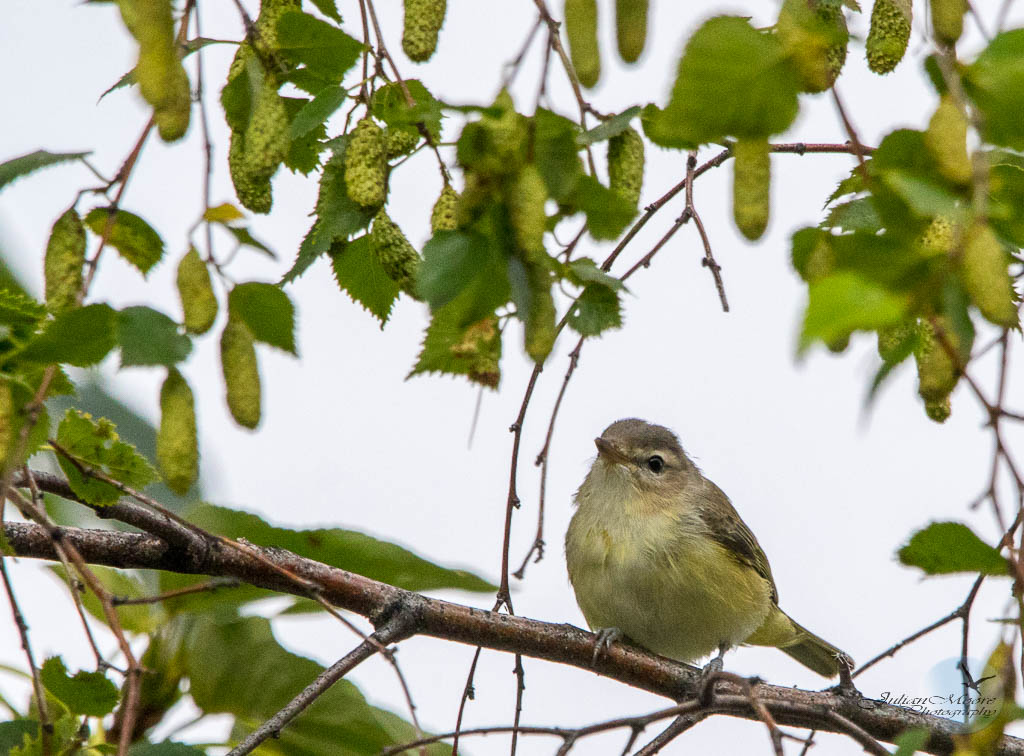
    Warbling Vireo

    Warbling Vireo
    White-throated Sparrow
    White-throated Sparrow
    More Yellow Warblers
    Mountain Chickadee 

    Titania's Fritillary Butterfly

      Banff Day 2 |Home | Day 9